



The God Who Sees Us
The Gospel of John tells us that Phillip invited Nathanael to see Jesus. Although doubtful, Nathanael eventually went. Upon their meeting, Jesus said to Nathanael, “Before Phillip called you, I saw you under the fig tree.” (John 1:48).
To the reader, especially one from a different time and culture, this comment may feel irrelevant, or even creepy. But Jesus was not just any man, and the fig tree reference was not just any comment. In fact, through that very conversation, Nathanael’s life forever changed.
For Nathanael, this simple sentence profoundly and personally communicated who Jesus is. One interpretation of the passage is that Jesus had a supernatural awareness of Nathanael previously spending time under a fig tree, perhaps in prayer. Another interpretation is that Jesus was referencing the symbolic, Scriptural connections between the fig tree and the coming of the Messiah from the Old Testament, in which Nathanael would have been well-versed. I wonder if perhaps it could be both. Regardless, this acknowledgement of having seen Nathanael under the fig tree was profound, personal, and life-changing.
Jesus did not only have such personal, life-changing encounters in store for those who knew Him during His early ministry…He has them in store for each person today. He desires for each individual He creates to personally encounter Him, and to do so again and again. Thus, our call to continue to approach Jesus with the expectation of new and deeper encounters with Him, to come to know Him more deeply, and to invite others to do so (as Phillip did for Nathanael) continues today. Thank you for joining me in the mission to reach those in General Cepeda, and please remember Jesus has encounters and opportunities for invitations in store for you right where you are!
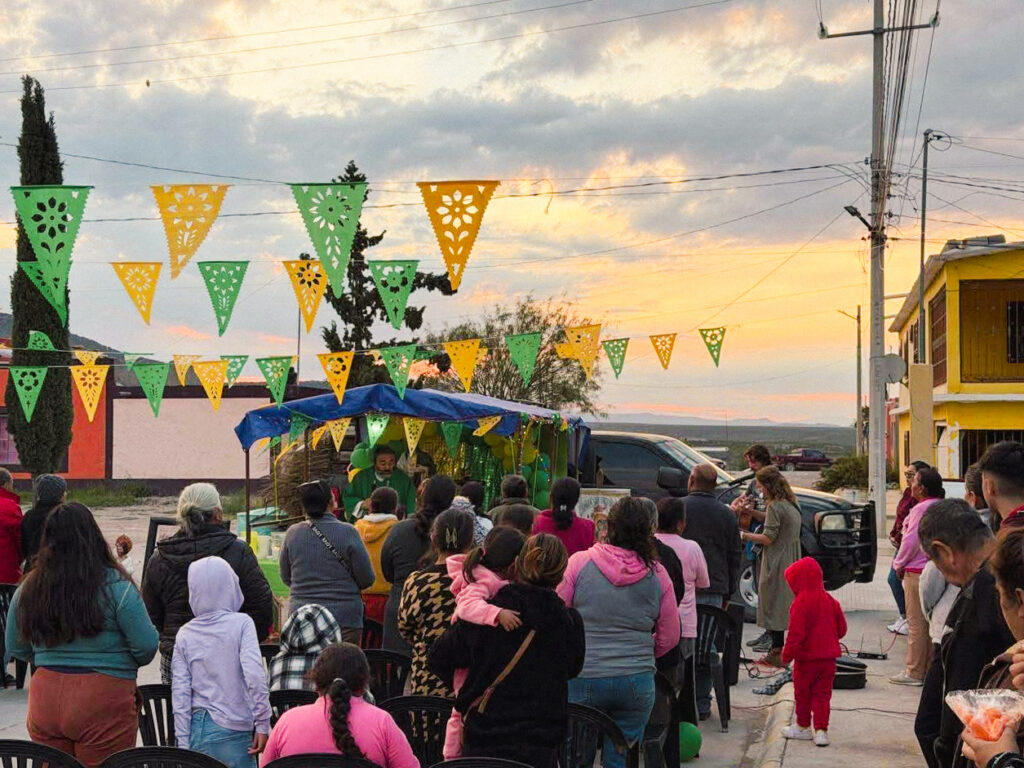
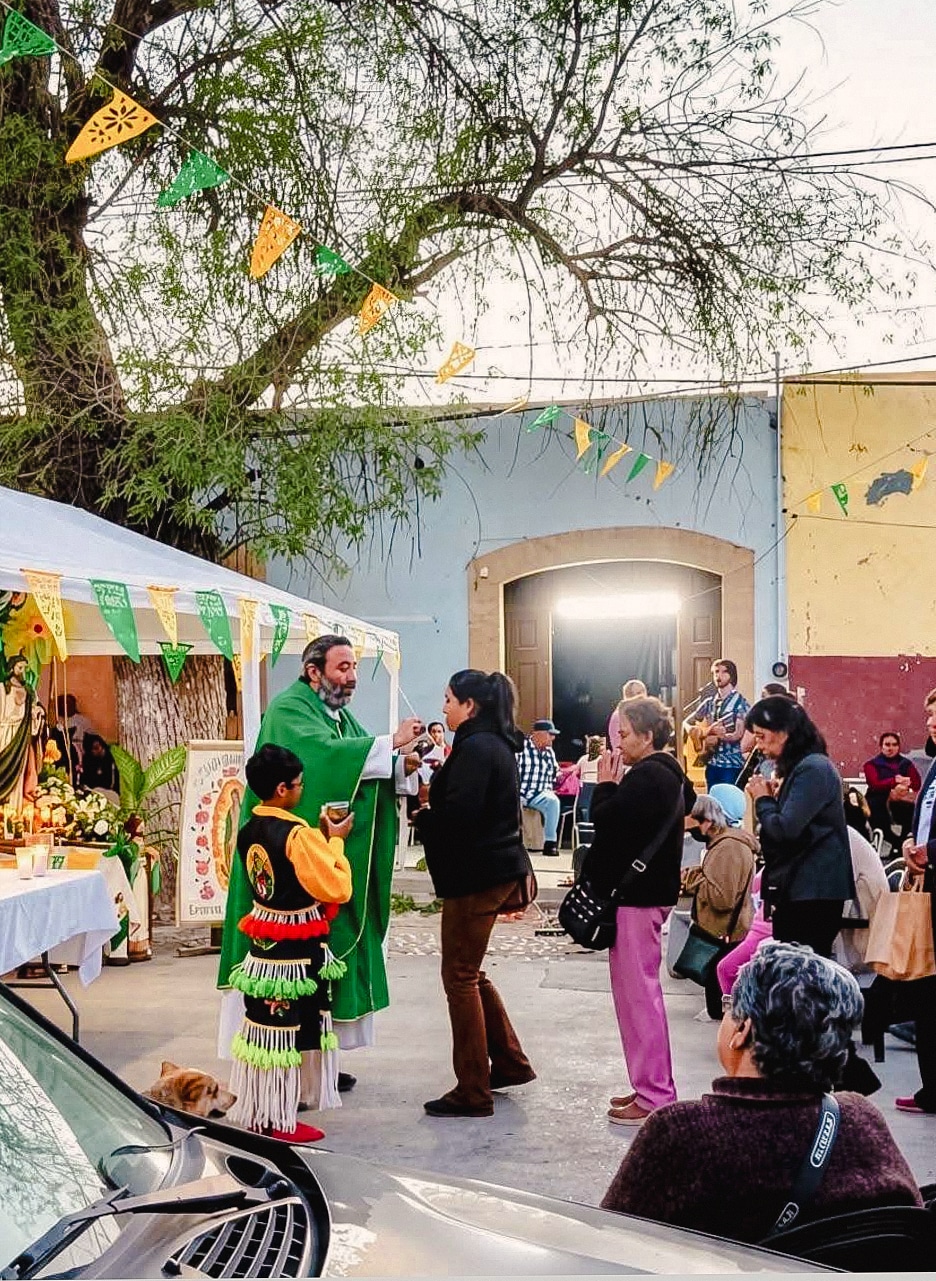
October is a busy time for the parish in General Cepeda. The month begins and ends with a novena, each of which consists of processions with prayer and song followed by Mass in a different part of town each day for nine days leading up to a feast day. Each neighborhood arranges for the Mass in their area, erecting a tent, finding chairs, and offering bread and coffee or champurrado (a traditional hot drink made of milk, corn flour, sugar, spices, chocolate, and sometimes nuts or raisins). This provides a unique opportunity for the neighborhood to come together and participate in parish life.
Each procession is led by a group of traditional dancers, who literally live the call to praise the dance. Behind them, one of the missionaries from our community drives a car with a speaker connected to microphones so that whoever is leading the prayer and song can be heard over the clanking of the dancers’ metal-bottomed shoes. Some of the other missionaries and I also play music for some of the Masses after the processions, which I am honored to do and very much enjoy.
In addition to the novenas and our other ministries, we received a visit from some missionaries from Louisiana, who offered a routine debriefing and team-building retreat for our community. This retreat provided for personal processing, discussions surrounding logistics and community dynamics, refreshing, intentional community time, game nights, and, as a bonus and one of the best aspects of the week, an opportunity to catch up and visit with the missionary friends who came from Louisiana.


ADD TO THE DISCUSSION